(Safe Operation · Standardized Use)
I. Pre-Operation Inspection
- Equipment Inspection
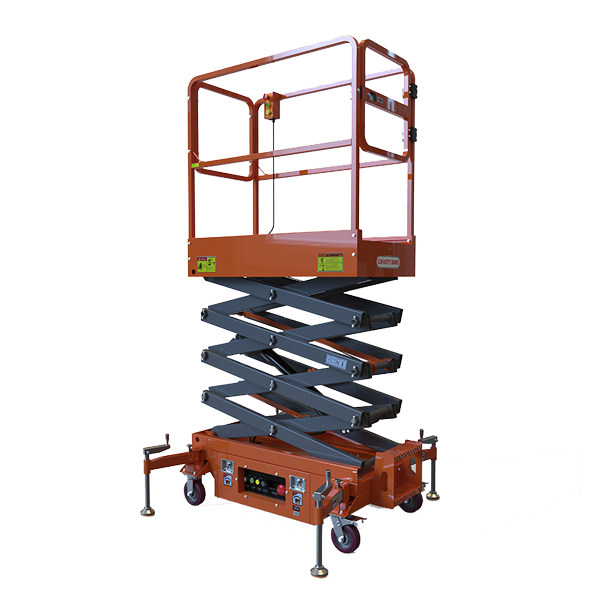
- Structural Check: Verify that scissor arms, hydraulic cylinders/screws are free from deformation, cracks, or oil leaks.
- Moving Parts: Inspect wheels and brakes for smooth operation, ensuring stability when locked.
- Safety Devices: Test emergency stop buttons, limit switches, and fall arrest locks (if equipped).
- Power System:
- Electric Models: Check battery level or power connection.
- Hydraulic Models: Ensure sufficient hydraulic oil with no leaks.
- Work Environment Inspection
- Ground Requirements: Flat, solid surface (recommended: concrete), slope ≤3°, free of oil or obstacles.
- Work Area: Confirm no overhead obstructions (e.g., pipes, cables) and no pedestrian traffic nearby.
- Load Confirmation: Total weight ≤ rated capacity (refer to nameplate).
- Personnel Preparation
- Operators must wear helmets and anti-slip shoes; harnesses are required for heights ≥2m.
- Prohibit operation by intoxicated, fatigued, or untrained personnel.
II. Operation Procedures
- Moving & Positioning
- Release brakes and push the lift to the work location.
- Align the platform center with the work point, then lock wheel brakes.
- Ensure platform levelness; adjust support legs if necessary.
- Ascending Operation
- Confirm no oversized items (height/width exceeding limits).
- Press the “Up” button, slowly raise to ~20cm above ground.
- Pause to check stability; proceed to target height if normal.
- Engage mechanical safety locks (if equipped) at working height.
- Aerial Work
- Sorting/Handling:
- Distribute loads evenly; stacking must not exceed guardrail height.
- Secure tools with lanyards to prevent drops.
- Maintenance/Installation:
- Mandatory harness use, anchored to secure points.
- Never lean beyond guardrails.
- Sorting/Handling:
- Descending Operation
- Clear all items from the platform.
- Disengage safety locks, hold “Down” button to lower slowly.
- Only move the lift after full descent.
III. Safety Prohibitions
⚠ Never:
- Overload, unevenly load, or lift unstable items (e.g., loosely stacked boxes).
- Work at height without lock engagement.
- Climb, shake, or adjust items during movement.
- Move the lift before full descent.
- Tamper with or remove safety devices.
IV. Emergency Response
- Malfunction: Hit emergency stop; report to maintenance.
- Hydraulic Failure: Use manual release valve (professionals only).
- Injury: Stop work, activate emergency plan, call for help.
V. Maintenance
- Daily: Clean platform, check hydraulic oil and fasteners.
- Weekly: Lubricate scissor arm joints; test safety devices.
- Long Storage: Release hydraulic pressure; store in dry conditions.
⚠ Warning Signs
🔴 Harness required for aerial work!
🔴 No boarding during ascent/descent!
🔴 No repairs by unqualified personnel!